A delta wye transformer is a three-phase transformer with a delta-configured primary winding and a wye-configured secondary. It is the backbone of modern electrical distribution.
This guide covers the basic theory, real-world uses, and a step-by-step process for picking the right transformer for your needs.
You need to understand delta and wye connections separately before combining them. Each one has its own rules for voltage and current. These rules decide which connection works best for a given job.
The wye connection, also called a star connection, joins one end of each of the three windings to a shared central neutral point. It looks like the letter “Y.”
Its voltage and current relationships are defined as: Line Voltage = √3 × Phase Voltage Line Current = Phase Current
The biggest advantage of this setup is that it creates a stable neutral point.
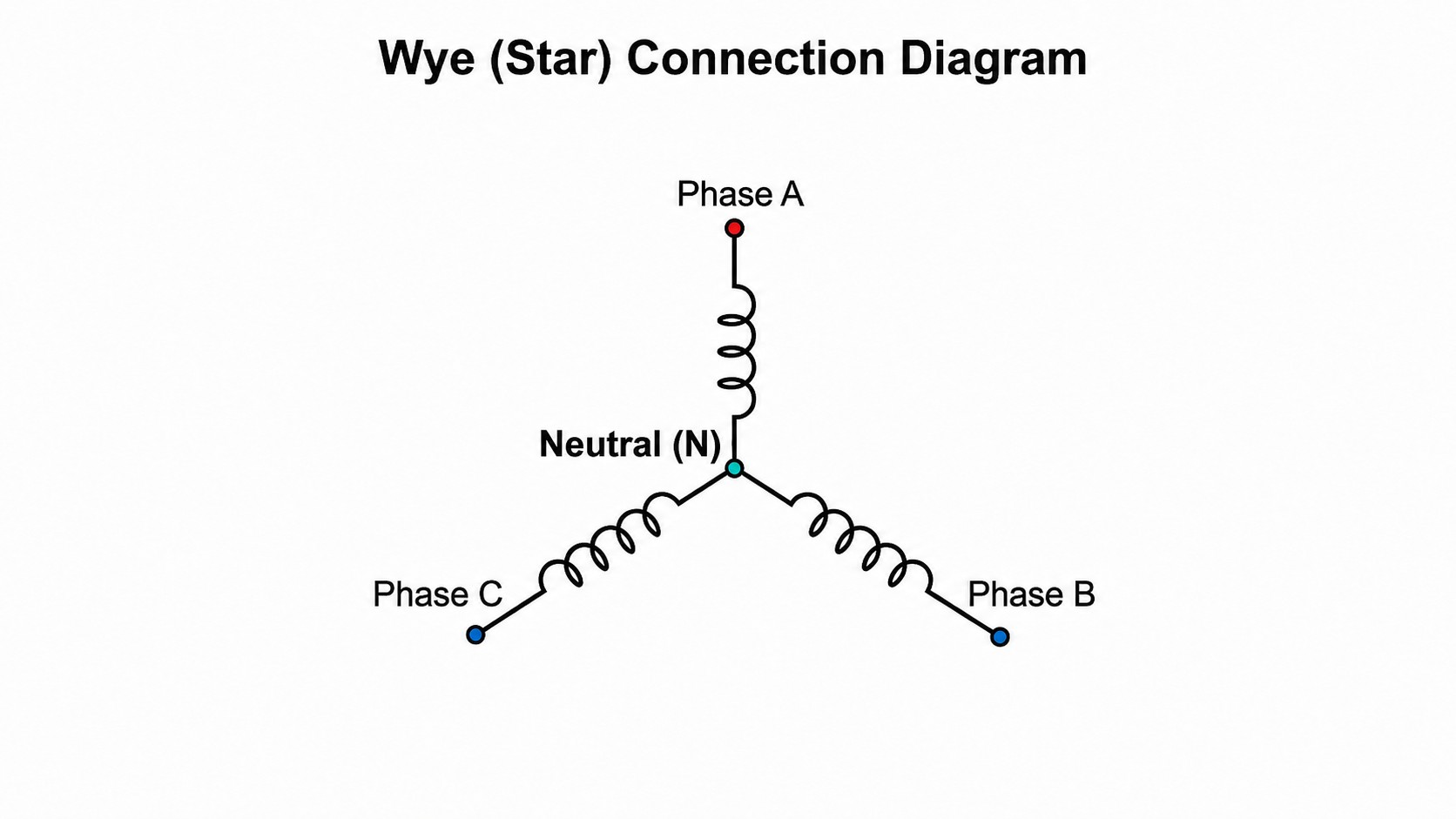
Key features of a wye or star connection include:
In a delta connection, three windings are joined end-to-end in a closed loop that looks like a triangle. There is no central neutral point in this setup.
Its voltage and current relationships are: Line Voltage = Phase Voltage Line Current = √3 × Phase Current
The square root of 3, which is about 1.732, shows up in both connection types. It drives the voltage increase in wye systems and the current increase in delta systems.
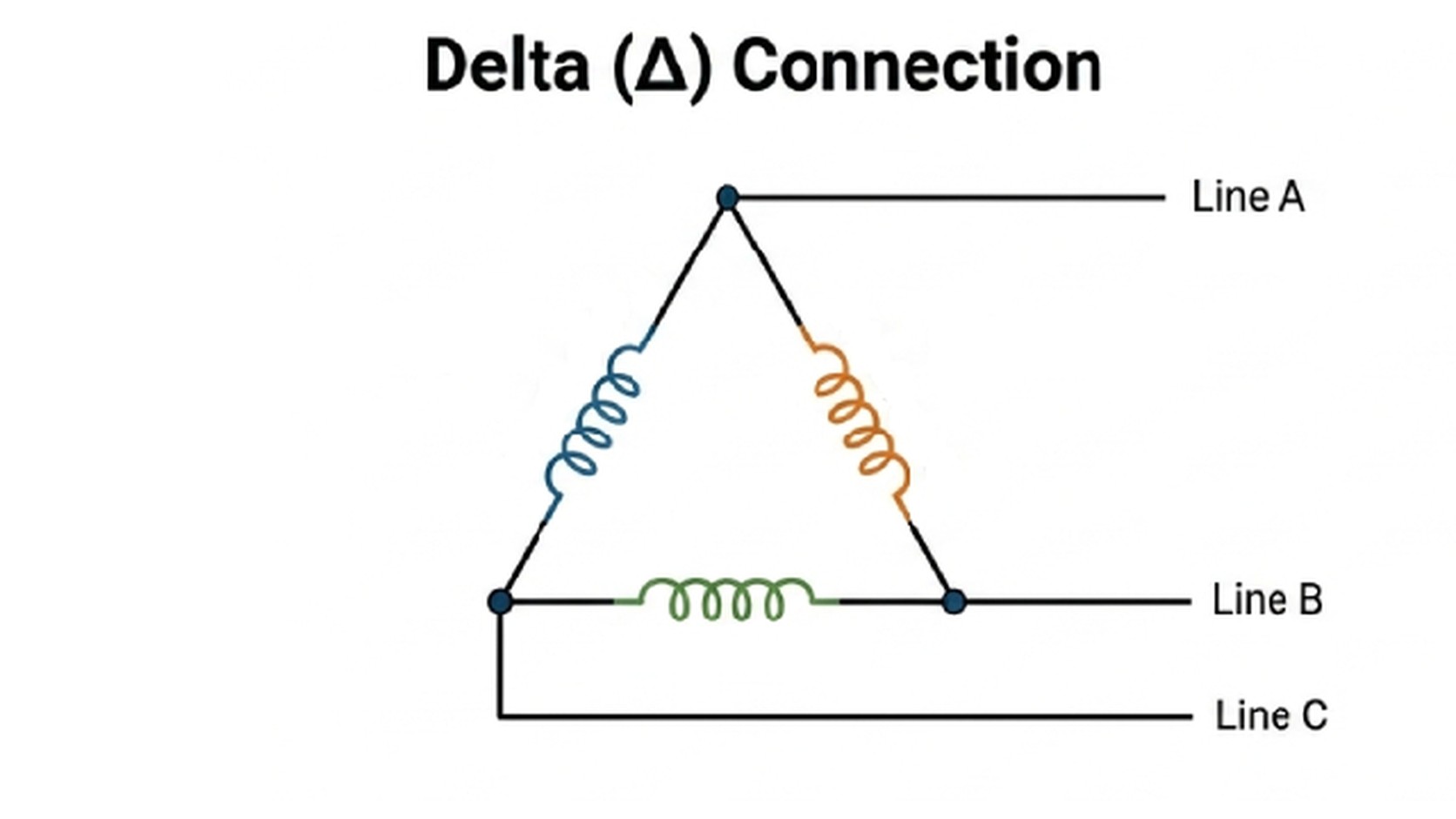
Key features of the delta connection include:
The delta wye transformer is the most common setup used in power distribution. It brings together the best features of both winding types. The standard design has a delta-connected primary on the high-voltage side and a wye-connected secondary on the low-voltage side.
High-voltage power enters the delta primary winding. The transformer steps the voltage down, and the wye secondary sends out a lower, more flexible voltage with a neutral point ready for grounding and single-phase loads.
The delta wye setup is one of the most commonly used in distribution systems for several important reasons.
The delta-wye is the most common setup, but engineers work with four main three-phase transformer types. Each one fits specific jobs.
| Configuration | Typical Application | Neutral Availability | Key Characteristic |
|---|---|---|---|
| Delta-Wye (Δ-Y) | Commercial/Industrial Distribution (Step-Down) | Yes (on secondary) | Most common; versatile, handles harmonics. |
| Wye-Delta (Y-Δ) | Generator Step-Up (Transmission) | Yes (on primary) | Provides ground on HV side, stable for delta loads. |
| Delta-Delta (Δ-Δ) | Industrial (Balanced 3-Phase Loads) | No | Simple, can run in “open delta.” |
| Wye-Wye (Y-Y) | Specific Utility Use (Requires careful design) | Yes (on both) | Can have harmonic and stability issues. |
Picking the right transformer means thinking through a few key questions. This checklist walks you through the most important decision points.
Features a fully oil-filled, sealed corrugated tank that naturally adapts to oil expansion. Engineered for high efficiency and low loss to significantly save power consumption and operating costs.

Two technical details of the delta wye transformer are especially important for system design: phase shift and harmonic filtering.
A delta-wye connection always creates a 30-degree shift between the primary and secondary line voltages. This is not a defect but a built-in feature defined by industry labels called vector groups, such as Dyn11.
This phase shift matters for two main reasons:
The standard phase shift is 30 degrees. The vector group label, such as Dyn1 or Dyn11, tells you whether the secondary voltage lags or leads the primary, as set by ANSI/IEEE standards for transformer connections.
Non-linear loads like variable frequency drives draw current in uneven pulses instead of smooth waves. This creates triplen harmonics, which are the 3rd, 9th, 15th, and similar multiples, that flow back into the power system.
These harmonics can overheat neutral wires and make the system unstable. The delta winding solves this problem by giving these triplen harmonics a low-resistance loop to circulate in. They stay trapped inside the primary winding and cannot travel back upstream into the grid.
The delta-wye transformer stands out because of its unique mix of benefits. It handles both single-phase and three-phase loads with ease, improves safety through a grounded neutral, and protects power quality by blocking harmful harmonics. Picking the right transformer connection is not just a technical detail. It is a core decision for building a safe, efficient, and dependable electrical system. For any engineer, understanding these fundamental connections is a key part of doing the job well.
 Products
 Projects
 Solutions
 Service
 News
News About CNC
 Contact Us